
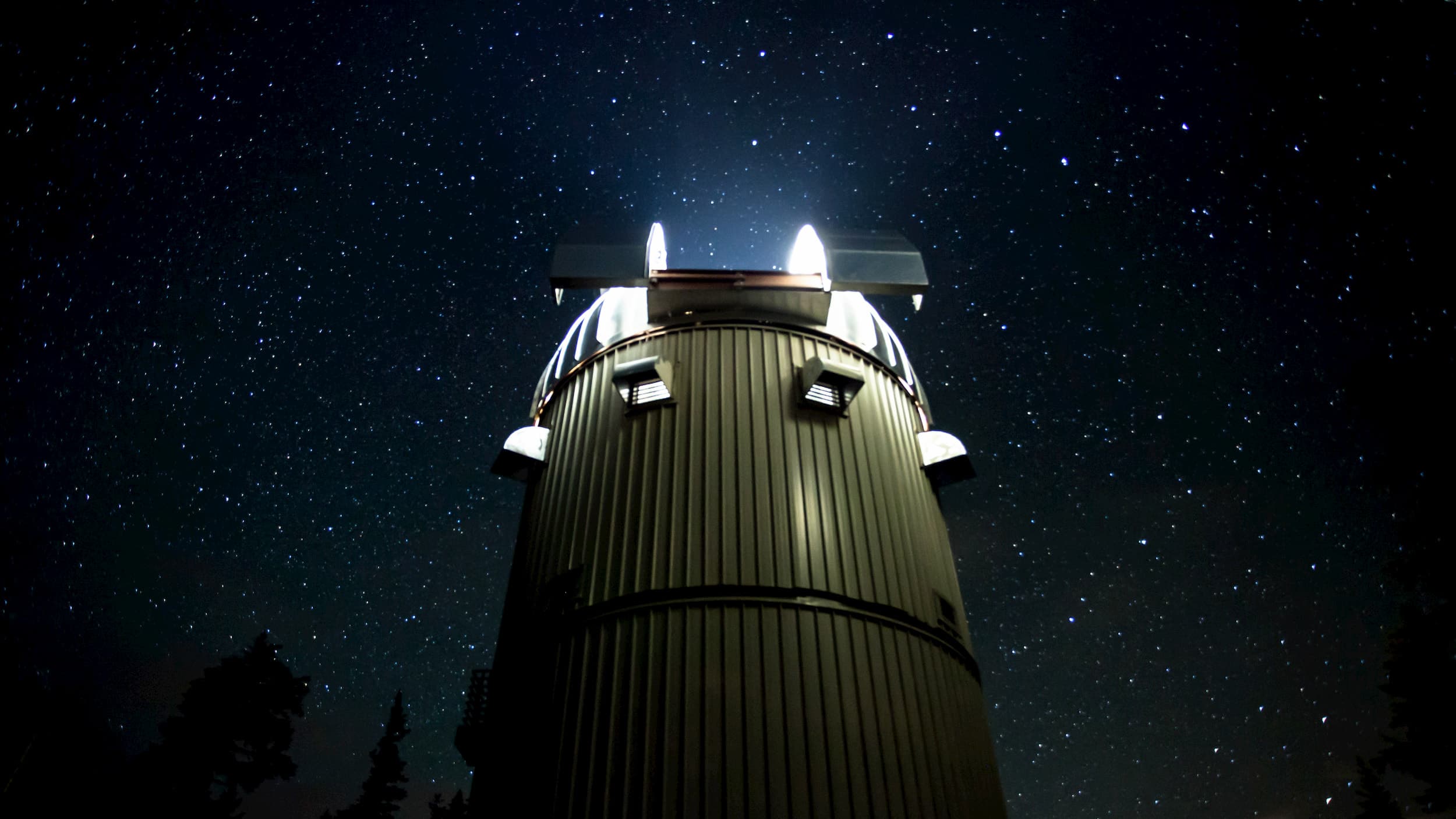
The Vatican Advanced Technology Telescope (VATT) sits atop Mount Graham at more than 10,000 feet elevation, and it holds a unique place in the history of astronomy: its 6-foot (1.83-meter) primary mirror was the very first large telescope mirror ever cast using the University of Arizona's pioneering spin-cast technique, a process completed on June 17, 1985. That casting method — spinning molten glass in a rotating furnace to form a natural parabolic curve — went on to revolutionize how large telescope mirrors are made worldwide, and VATT was the proof of concept that started it all.
Faith and Science on the Mountain
VATT is operated by the Vatican Observatory in partnership with the University of Arizona, making it one of the most visible collaborations between the Catholic Church and modern astrophysics anywhere in the world. The telescope achieved first light in 1993 and has operated continuously since, contributing to research on stars, galaxies, and the broader structure of the universe.
Why the Views Are So Sharp
One of VATT's most remarkable traits is that it delivers exceptional image quality without adaptive optics — the technology many modern telescopes rely on to correct for atmospheric turbulence in real time. Mount Graham's unusually stable atmosphere does much of that work naturally, letting VATT's relatively modest mirror size punch above its weight in image sharpness.
Visiting VATT
Like the observatory's other instruments, VATT sits within the Mount Graham International Observatory complex, where public access to the summit is limited. Visitors interested in seeing the telescope or learning more about its research should start at Discovery Park Campus in Thatcher/Safford, which serves as the gateway for observatory tours and can provide the current schedule. VATT is best understood alongside its neighboring instruments at MGIO, the Submillimeter Telescope and the Large Binocular Telescope, which together make Mount Graham one of the most scientifically productive mountaintops in North America.